Reading Mycelium
Yura Kang
Mycelium
2025
Yura Kang is a Brooklyn-based designer and MFA candidate in Communication Design at Pratt Institute. Their work explores design as a metabolic system, engaging themes of digestion, repetition, and transformation. They work through a multidisciplinary approach across research, installation, and publishing, with an interest in embodied design processes and collective knowledge-making.
INS @yurakang.wip |
website: yurakangwork.com
Yura Kang
Mycelium
2025
Yura Kang is a Brooklyn-based designer and MFA candidate in Communication Design at Pratt Institute. Their work explores design as a metabolic system, engaging themes of digestion, repetition, and transformation. They work through a multidisciplinary approach across research, installation, and publishing, with an interest in embodied design processes and collective knowledge-making.
INS @yurakang.wip |
website: yurakangwork.com
Reading Mycelium is an experiment in metabolic reading and material translation. Over several months, I have been feeding my creative process with texts that shape my thinking around collectivity, care, queer ecology, and material intelligence.
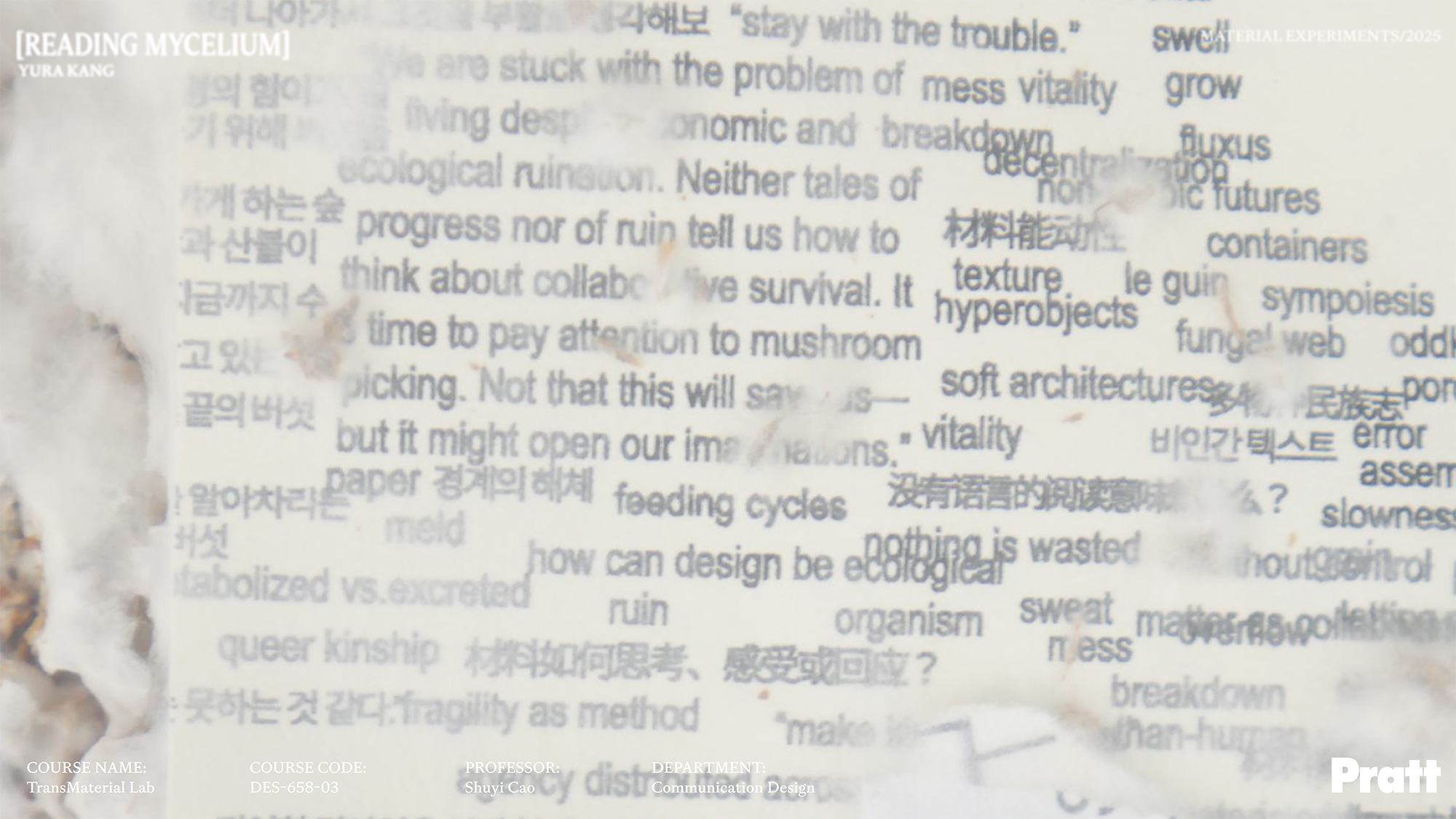
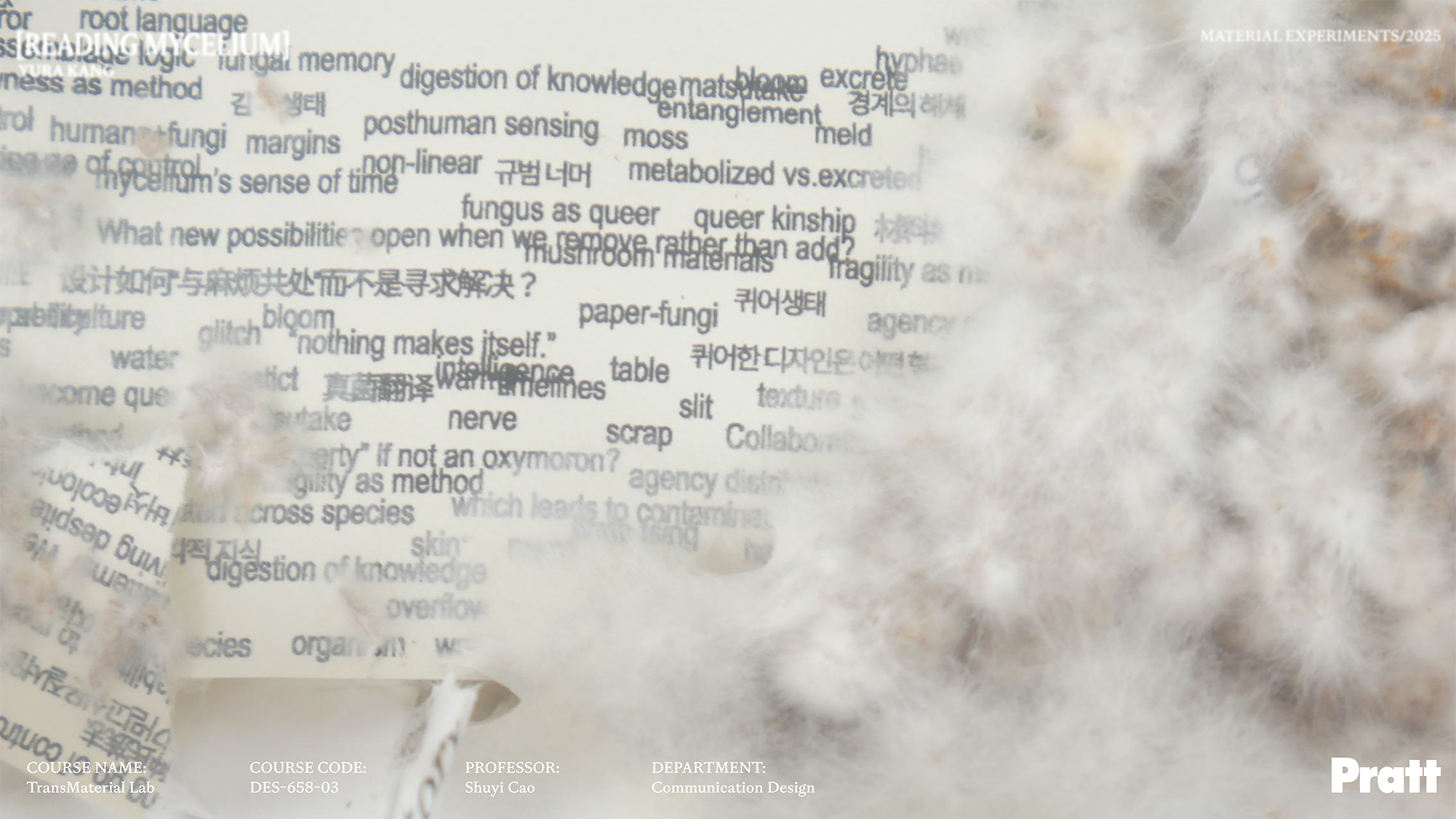
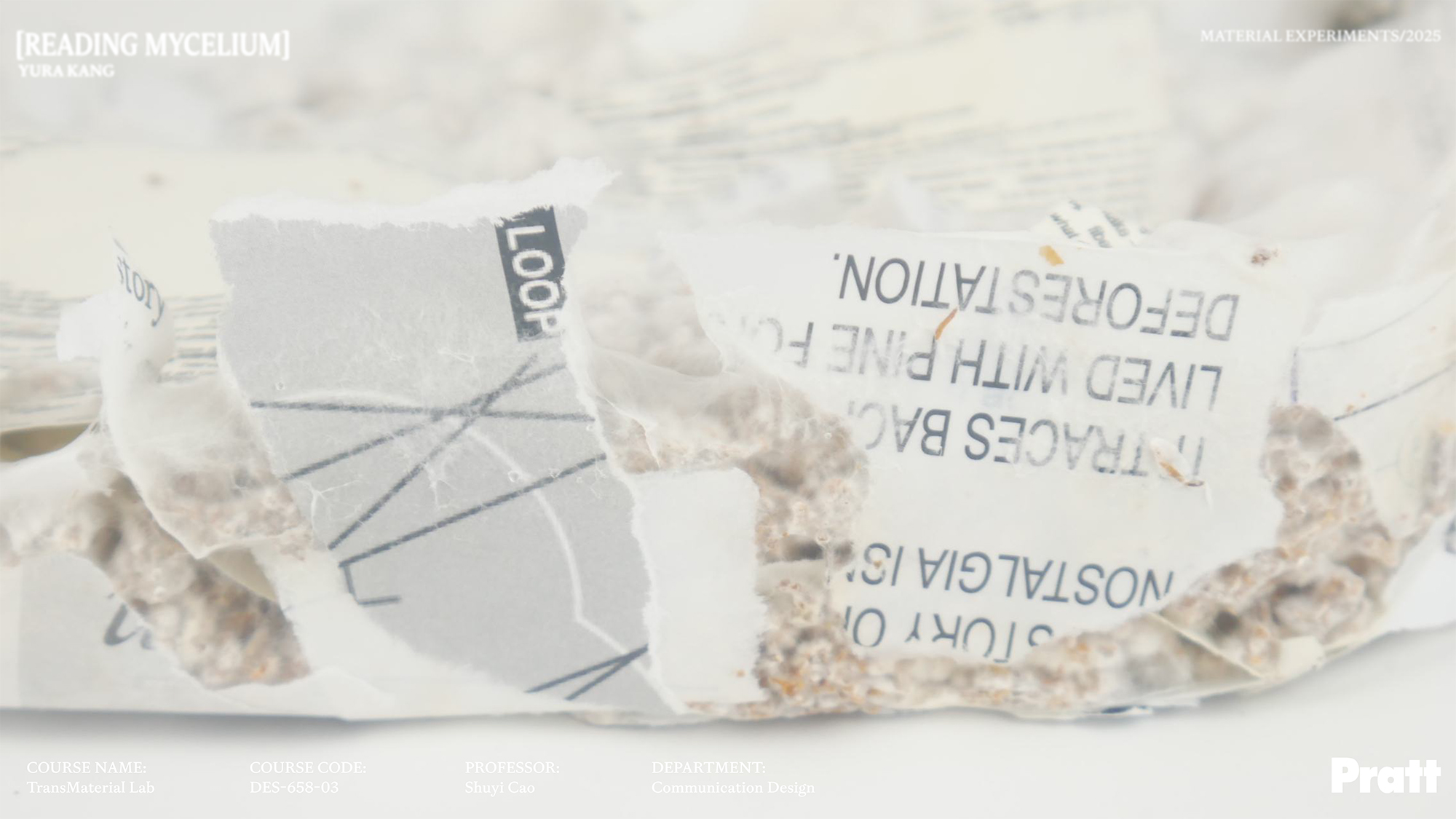
In this project, I extend the metaphor of digestion by physically feeding these readings to living mycelium. Shredded book pages, printed images, and paper pulp are mixed with a mycelial substrate, inviting the organism to read alongside me and metabolize language and image through its own fungal logic. Rather than treating text as static information, the work asks how knowledge might be absorbed, broken down, transformed, or refused by a nonhuman reader.
In this project, I extend the metaphor of digestion by physically feeding these readings to living mycelium. Shredded book pages, printed images, and paper pulp are mixed with a mycelial substrate, inviting the organism to read alongside me and metabolize language and image through its own fungal logic. Rather than treating text as static information, the work asks how knowledge might be absorbed, broken down, transformed, or refused by a nonhuman reader.
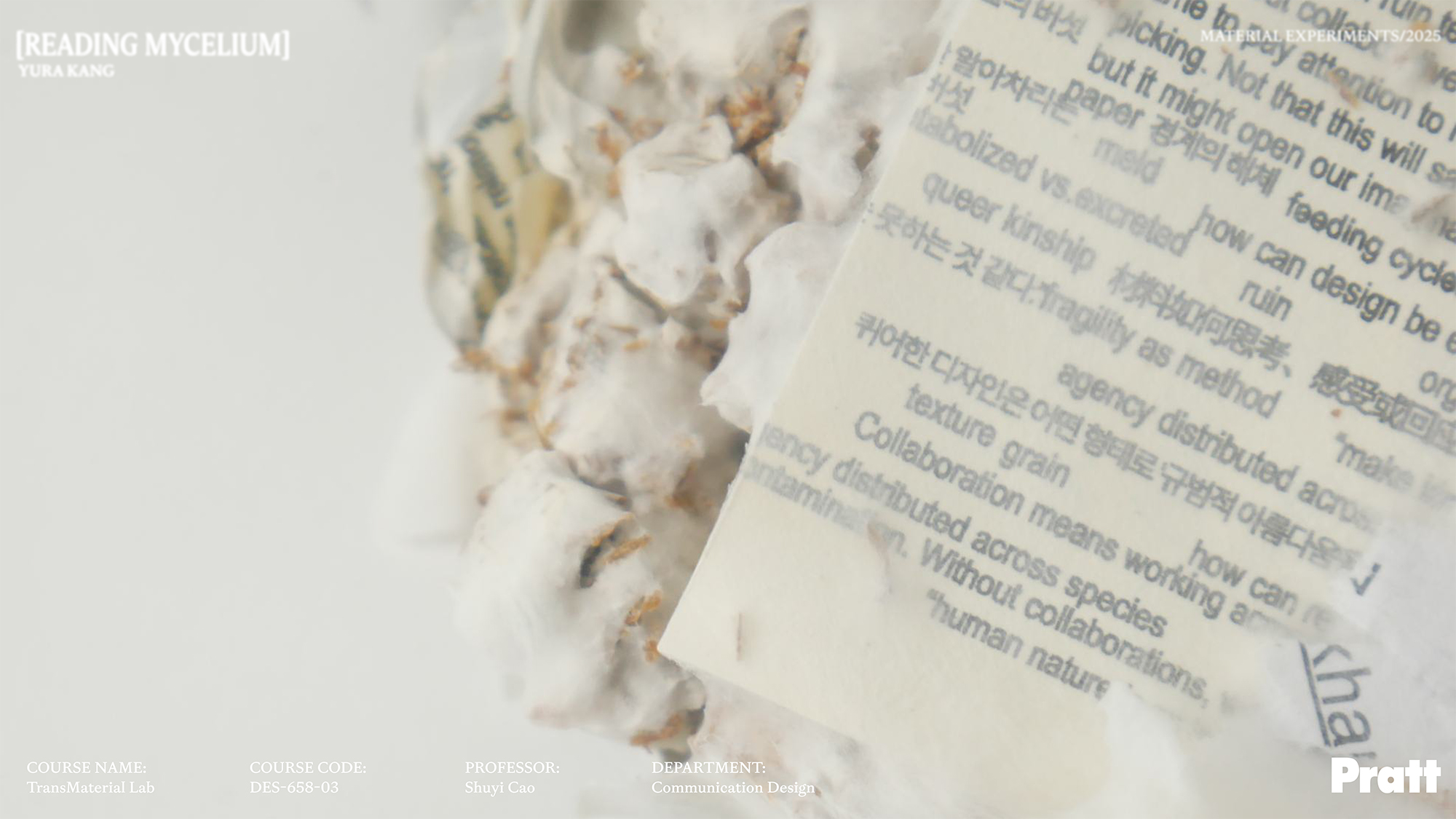
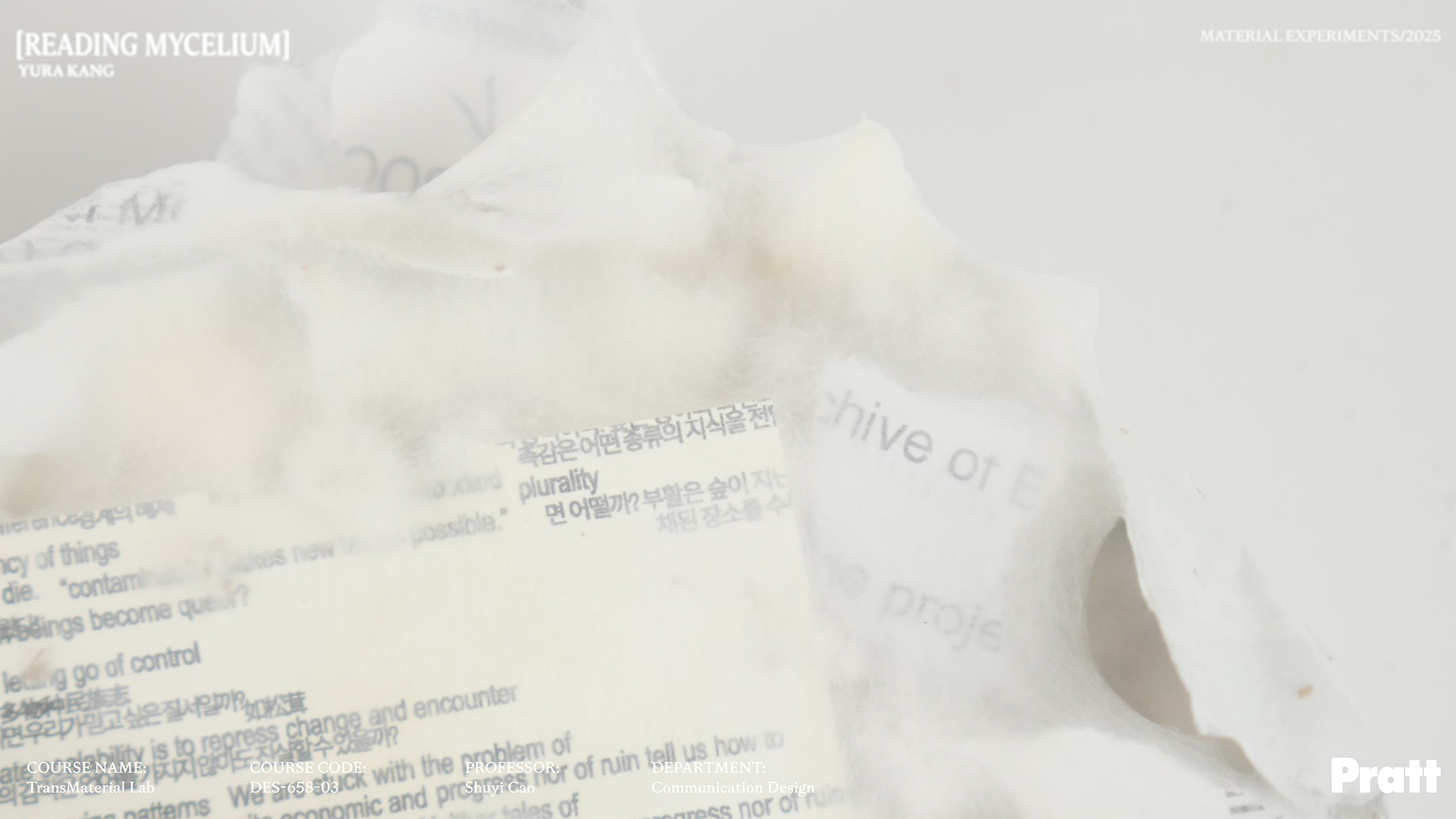
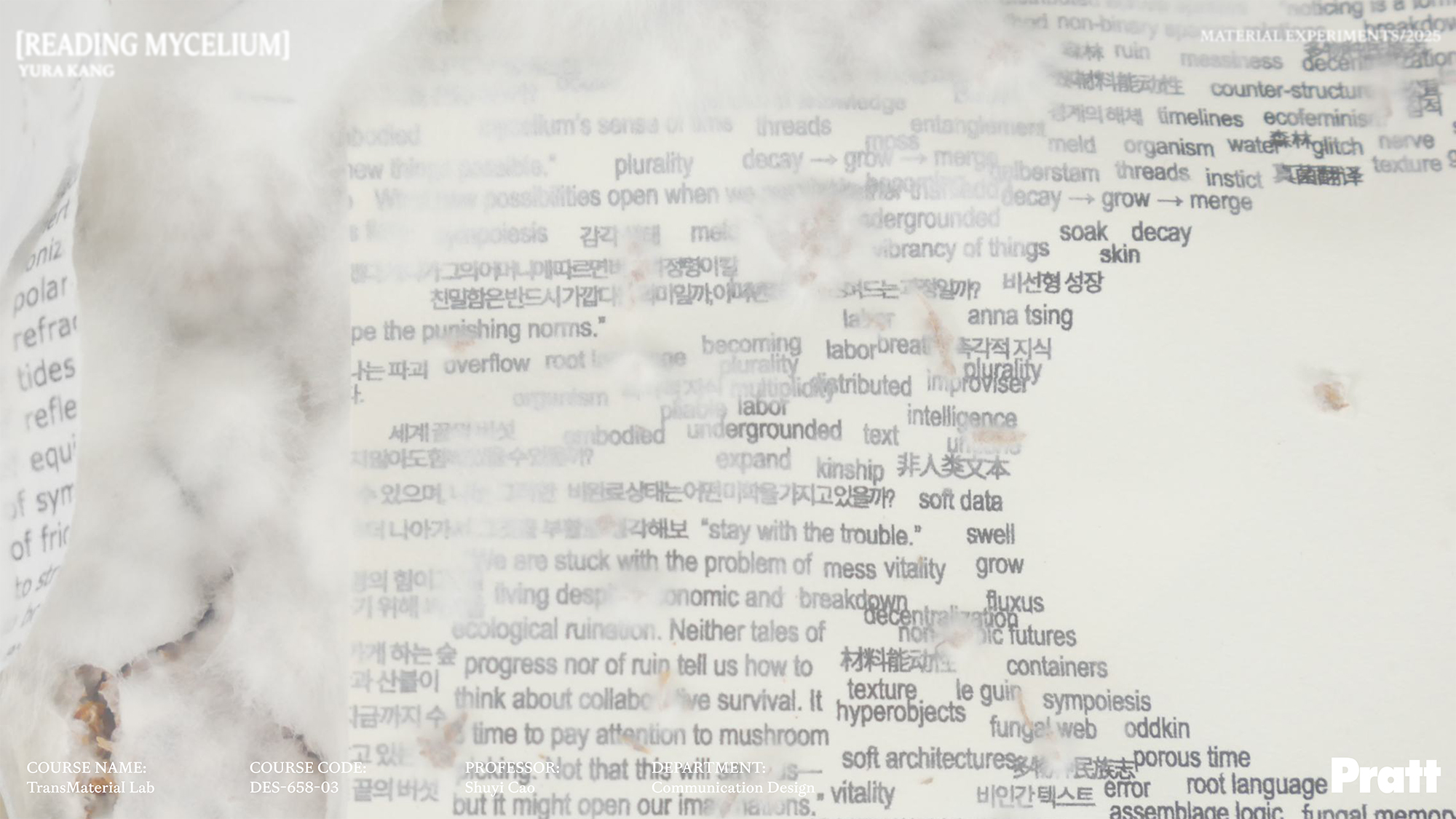
The project is informed by Dr. Jane Goodall’s call to “learn from nature” and to let “Mother Nature be your co-designer,” reminding us that natural systems waste nothing, balance themselves, and create beauty with purpose. This principle grounds the work’s material logic and ethical position.
Situated between ecological material practice, posthuman design, and ritual, Reading Mycelium aligns with the course theme of Material Agency. Decomposition and colonization become a collaborative reading practice in which meaning emerges slowly, unevenly, and unpredictably.
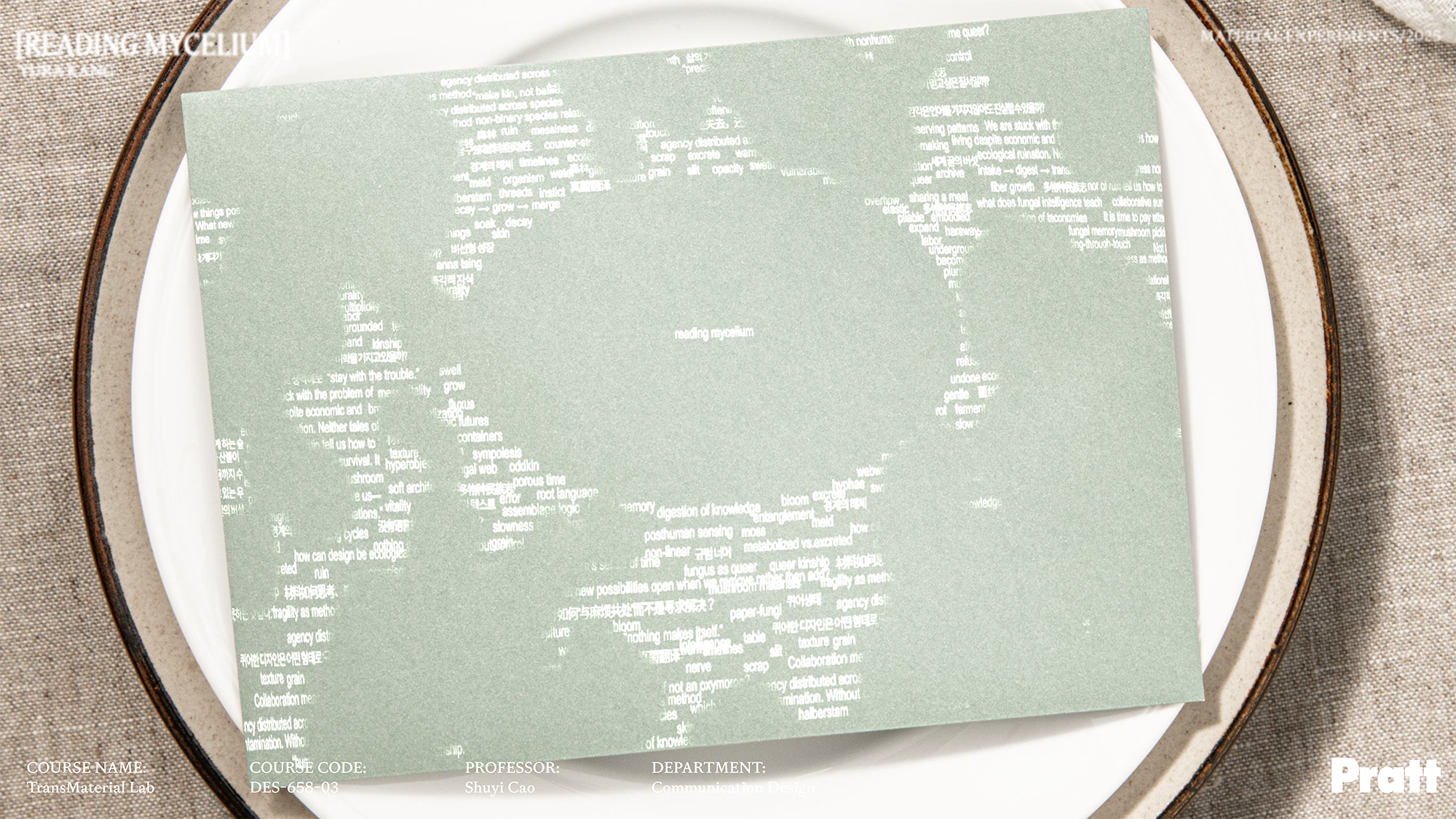
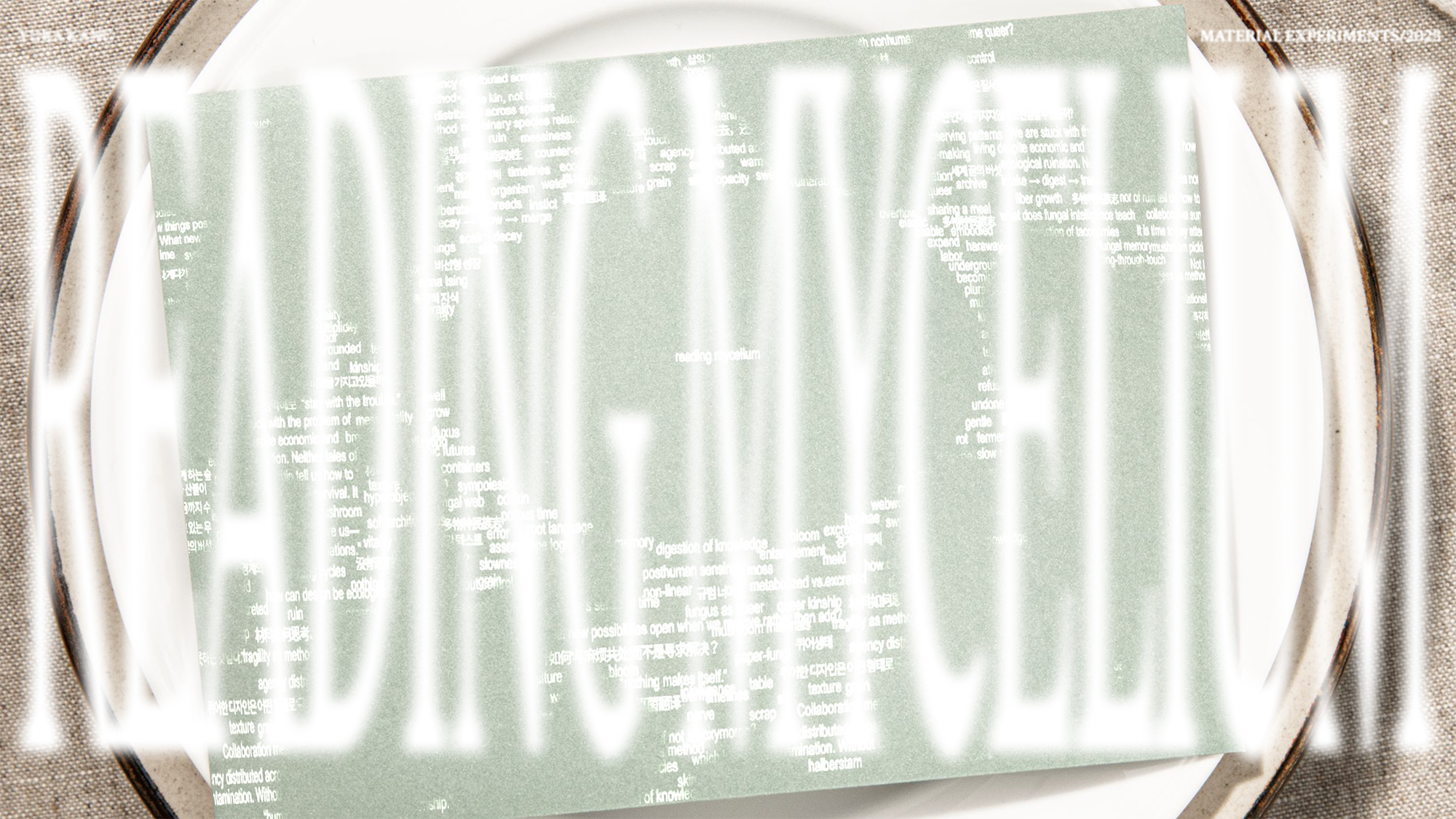
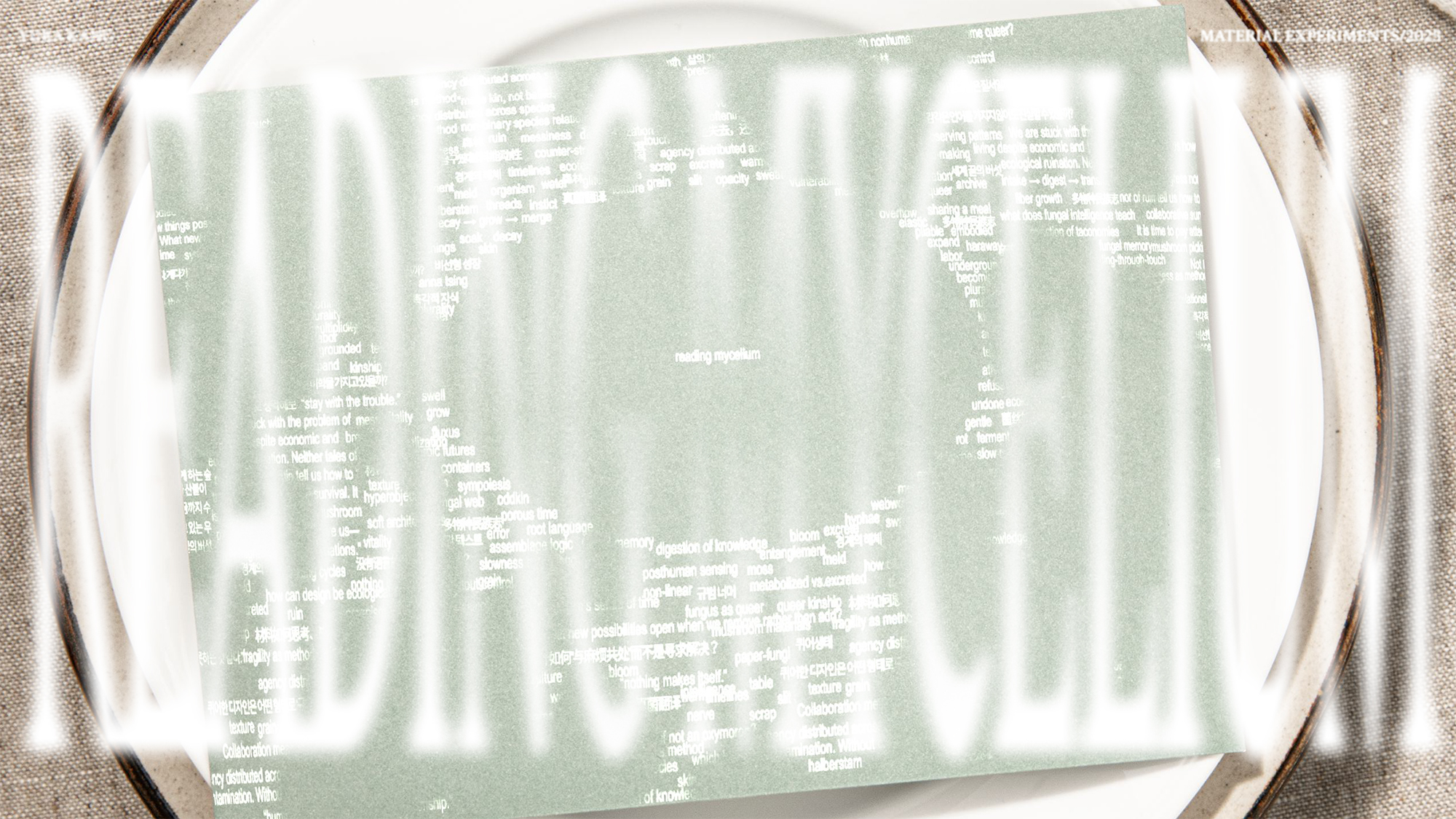
The final outcome takes the form of a small-scale mycelium-grown pattern layered over a system map of texts and a dinner-table invitation. The invitation functions as both a design artifact and a social gesture, calling participants to gather around the table as a site of shared reading, care, and conversation. The mycelial patterns trace what has been absorbed, transformed, and partially erased by the organism, while the system map visualizes the network of texts that fed the process. Together, they form a hybrid archive that records not only information, but the conditions of its digestion. Framing the table as a space for slow, collective reading, the work proposes design as a practice of hosting, metabolizing, and making space for what emerges across human and more-than-human systems.